
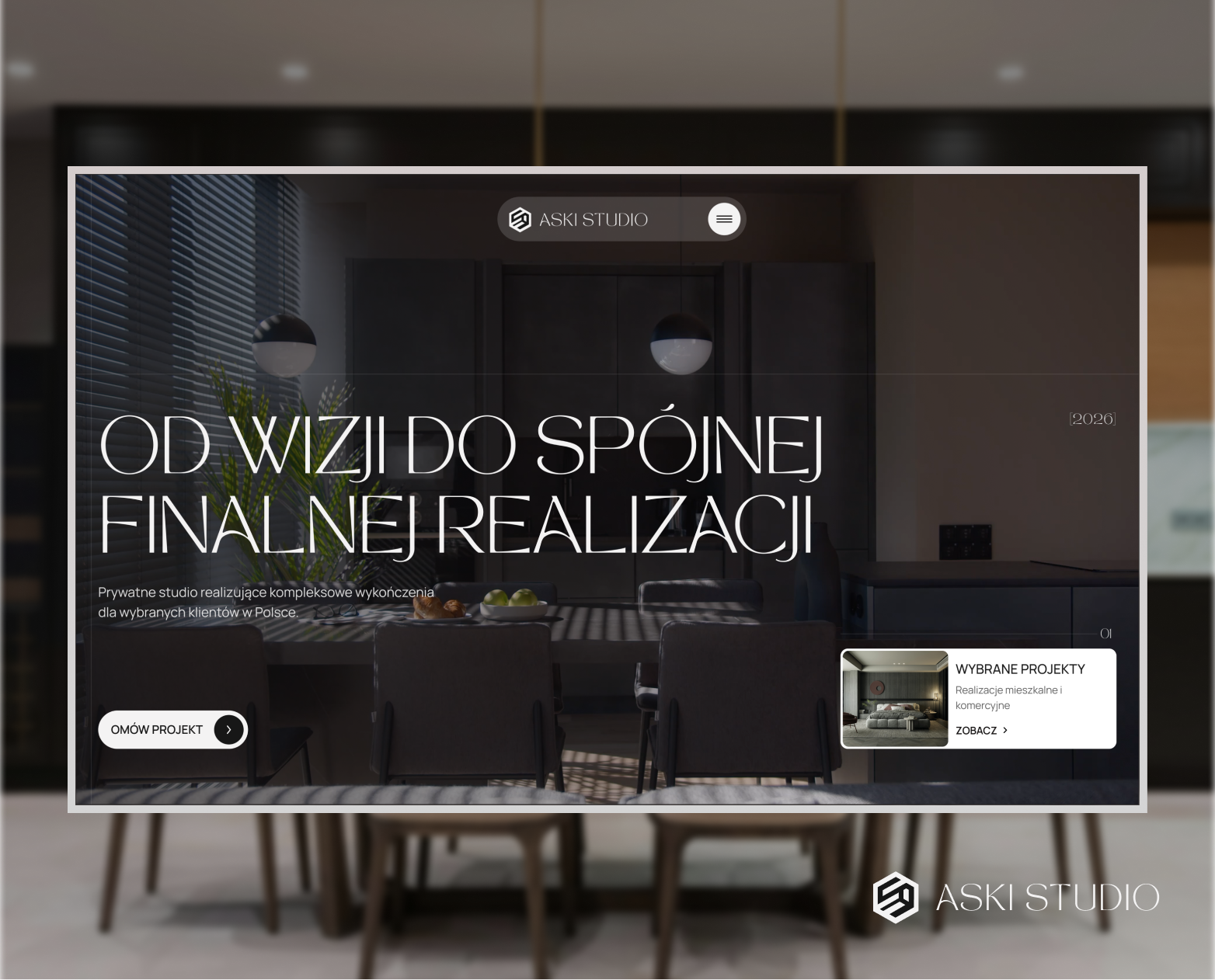
Let people see the studio's work before asking for a conversation
ASKI Studio is a Polish interior and fit-out studio. Its work is visual, and prospective clients need to see the spaces it creates before deciding whether to begin a conversation. The website gives that evidence a prominent place in the introduction.
Our project is a one-page Webflow site in Polish. It brings together selected project imagery, information about the studio, directions of work, a process explanation and a consultation request. The page gives visitors a compact route from looking at the work to understanding how to contact the studio.
The finished interiors shown are ASKI's work. Our role was the website design and development, including a connected inquiry route. The project is useful for another studio or service business that relies on a visible body of work and a personal consultation as its next step.
A single page creates one continuous introduction
ASKI's site presents its main content on one page. A visitor can move through the work, learn about the studio and reach the consultation request without navigating a large hierarchy of service pages. The content needs to be selected carefully because every section contributes to the same introduction.
A compact structure can be appropriate when the offer is focused and the strongest evidence can be shown together. It gives the page a clear sequence, with project imagery and short explanatory sections supporting one another. The form then belongs to the same journey rather than an unrelated destination.
The project does not make one page the right answer for every studio. A business with distinct audiences, extensive services or a growing editorial programme may need a different structure. The useful question is how much information customers need before they can make the next meaningful decision.
Photography carries the character of the studio
Large project images and generous space are central to the ASKI presentation. They allow visitors to examine the interiors and form an impression of the studio's work. Shorter text sections provide context without demanding attention at the same moment as the images.
This balance matters for a visual service. Photographs can show finish, composition and atmosphere, while the website needs to make clear whose work is being presented and what kind of service the studio offers. The image and the explanation have different responsibilities.
For another business, the quality and organisation of the existing project material are therefore central to scope. Share which projects can be shown, what information belongs with them and which images best explain the work. A strong layout needs suitable evidence to carry it.
The studio introduction connects the work to the offer
A visitor may like the interiors without yet understanding the services behind them. The page includes a studio description and directions of work to connect the visual portfolio with the business. Those sections help explain what kind of conversation a prospective client can start.
This is a practical distinction for any portfolio-led website. Showing completed work answers what the company can produce. Describing the service answers what the customer can ask the company to do. Both pieces of information are needed when the next step is a consultation.
The ASKI structure places those explanations within the visual presentation. For another studio, the exact wording should come from its own service boundaries. Interior design, fit-out and other related offers should be described precisely so the website introduces the work the business is prepared to undertake.
Process information helps a visitor prepare
The website includes an explanation of ASKI's process. Within a consultation-led service, that gives a prospective client more context for the work they are considering. It can help them understand the shape of an engagement before they make contact.
A useful process section should describe the service in terms the customer can follow. It may explain what information is discussed, how decisions relate or what the business delivers. Its purpose is to reduce uncertainty about the engagement rather than overwhelm the page with internal production detail.
When preparing a similar site, share the actual process the business uses and the questions customers repeatedly ask about it. The website can then present a concise explanation based on real work. That is more useful than adding a generic sequence simply because other agency sites display one.
The consultation request reaches the studio's channels
ASKI's inquiry flow routes requests to email and a Telegram bot for the studio. The customer sees a consultation request on the website, while the connection determines how the information reaches the team behind the service.
This is a distinct part of the project from visual presentation. A form needs to collect the appropriate information, and the receiving route needs to fit the people responsible for responding. The value lies in connecting the visitor's action with a place where the studio can handle it.
For a comparable project, discuss that destination early. Identify who receives requests, which details they need and what should happen next. The appropriate channels depend on the business's actual workflow. The ASKI case provides an example of website inquiry routing, with the selected channels serving this particular studio.
CMS editing keeps selected projects manageable
The Webflow site includes project editing through the CMS. This gives the studio a way to maintain the work presented on the page. A portfolio needs that ongoing attention as the business decides which completed projects best represent its offer.
Editable content should be planned around the tasks the owner will perform. It helps to know which images, titles and supporting details need to change and how the presentation should behave with different material. A reusable structure works best when realistic projects are considered during design.
For a new site, identify the person who will update the portfolio and the material they can supply. The handover should explain the agreed editing tasks and the limits of routine changes. That keeps the content management scope connected to what the team actually needs after launch.
What another studio can take from ASKI
The project combines a focused structure, prominent project photography, short service explanations, a consultation request and connected inquiry handling. Those pieces support the same business situation: a visitor needs to see the work and understand enough to start a personal conversation.
If that resembles your business, bring a selection of projects and explain what customers need to know before contacting you. Share the existing website, the services you want to present and the channels your team uses for inquiries. Also identify which content should be editable as new work becomes available.
We can then discuss whether a compact page or a broader website is appropriate. The aim is a presentation that gives your work the attention it needs, explains the service around it and makes the next step clear for both the prospective client and the team receiving the request.