
A website that makes your business easier to understand
A potential customer rarely starts by examining your technology. They want to know whether you solve their problem, whether your work looks credible, and what happens if they contact you. A useful business website answers those questions in a sequence that feels natural. It gives the owner a clear place to explain the offer and gives the visitor enough information to take a considered next step.
We develop websites around that exchange. The starting point might be a new business, an established company whose site no longer reflects its work, or a team preparing to serve another market. The project does not need a long list of features to be worthwhile. It needs the right pages, convincing examples, understandable language, and a contact route that somebody in your team actually owns.
Decide what the website needs to do first
Before deciding how many pages to build, choose the main job of the website. A consultant may need to explain a specialist service before a discovery call. A design studio may need prospects to explore completed projects. A property business may need to present an offer in a way that helps an interested buyer ask a specific question. Those are different buying journeys, even if all three websites use an attractive homepage and a contact page.
We discuss what a useful enquiry looks like for your business. A phone number alone might be sufficient for one company; another needs the visitor to name a service, location, or project type. That decision shapes the content and the point at which we ask people to get in touch. It also helps avoid a common problem: measuring every message as a success when many messages concern work you do not offer.
Bring the questions you hear during sales conversations. Which part of your offer takes the longest to explain? What do customers misunderstand? Which project do you usually show to make an idea clear? These questions provide a better starting point than choosing a fashionable layout without knowing what it needs to communicate.
Agree the scope before comparing prices
A website proposal should identify the pages, languages, design work, content responsibilities, development, and launch tasks included in the project. It should also make the exclusions visible. A project with five carefully prepared pages is different from a site with five templates that must accommodate a large catalogue. Counting navigation items alone does not explain the work.
The scope can include an initial review of the offer, a page structure, the visual design, writing or editing the agreed content, development, and checks before launch. The precise combination is agreed for your project. Existing brand materials, photography, product information, and account access may come from your team. If those materials need work, we identify it instead of assuming that they will appear halfway through the build.
A useful proposal also separates one-time project work from ongoing costs. The domain, hosting, platform subscriptions, paid fonts, licensed assets, and third-party services can have different owners and renewal dates. Their relevance depends on the chosen solution. We explain what applies so that you can compare the complete operating arrangement, rather than only the initial design fee.
Design around real content and real decisions
The design needs to work with your actual offer. Long service names, uneven project descriptions, multilingual navigation, and portrait photographs are normal business materials. A design that only looks good with short placeholder sentences has not yet solved the problem. We use representative content while developing the page structure so that the important decisions are visible early.
Visual hierarchy helps a reader know where to look. A strong headline introduces the offer, an example makes it tangible, and a concise explanation connects the example to the visitor’s situation. Detailed information belongs where someone considering the purchase can find it. The first screen can remain direct while the rest of the page explains scope, options, process, and questions that affect the decision.
Mobile use deserves its own attention. The navigation, project imagery, contact controls, and reading flow must remain usable on a smaller screen. Merely reducing the desktop layout is not enough if the most useful link disappears into a crowded menu or a project image becomes impossible to interpret. We review the important states with real content at different sizes.
Use relevant work as evidence
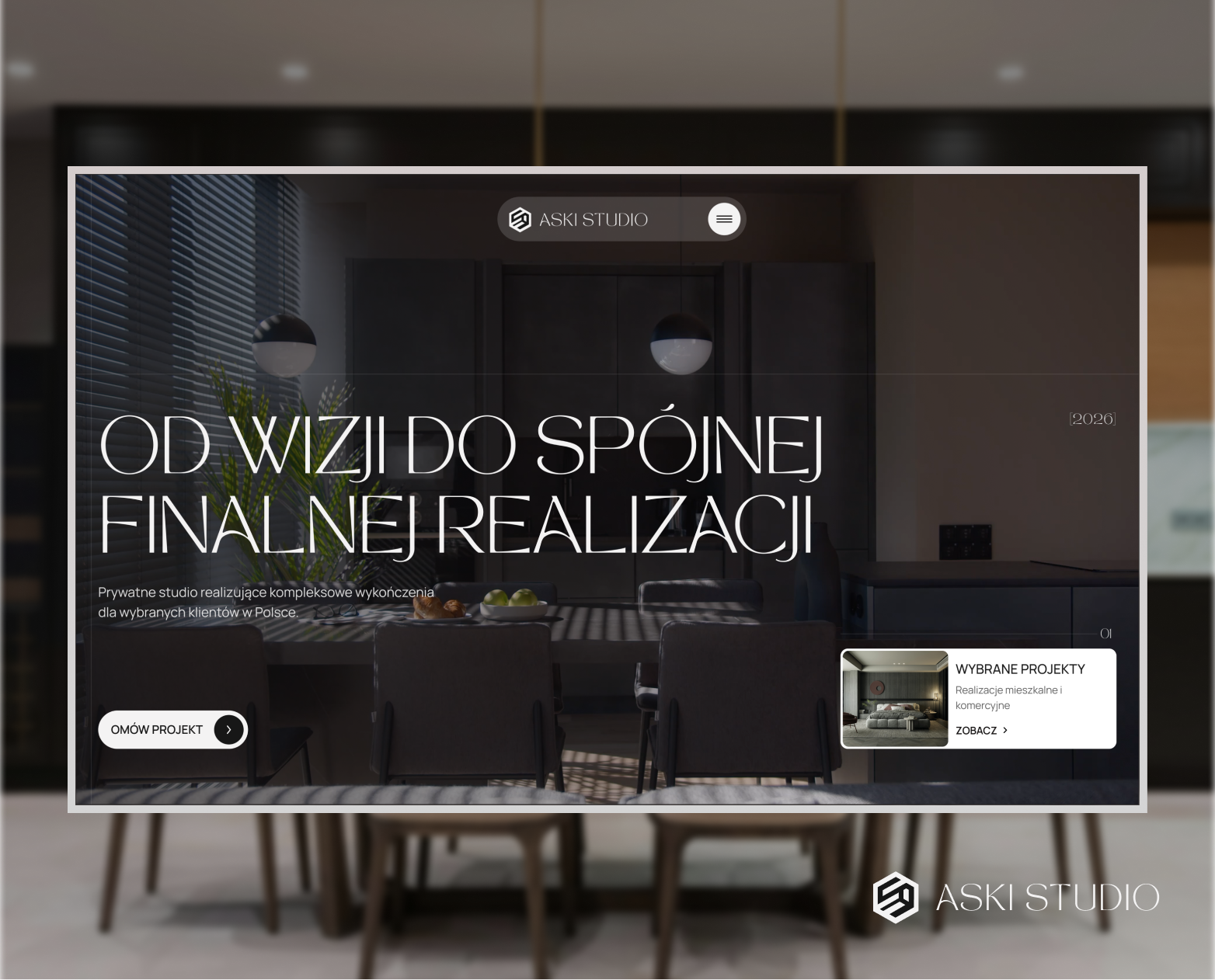
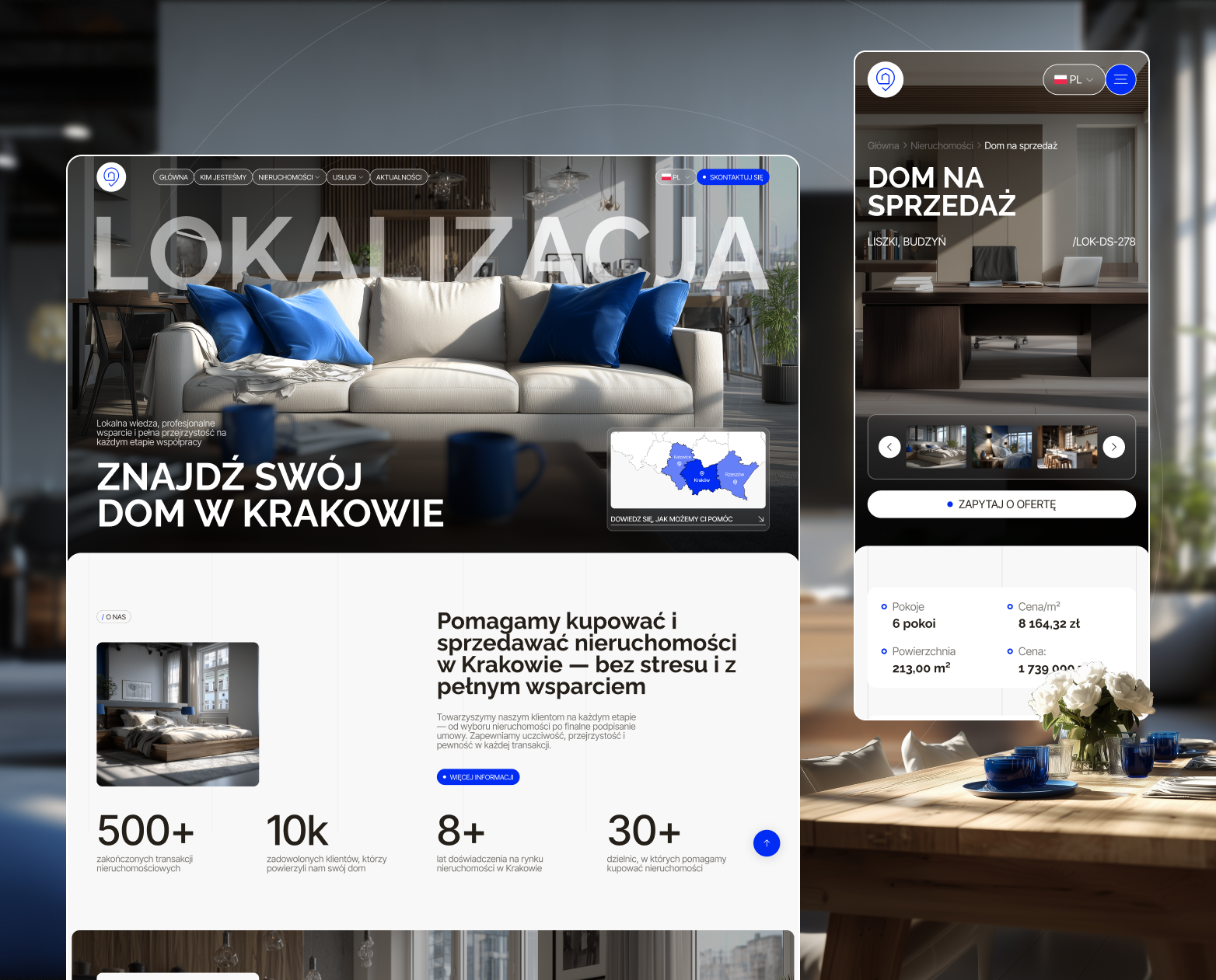
The HeadPills portfolio includes ASKI STUDIO and Lokalizacja, among other completed website projects. They offer different contexts for a discussion: a studio presenting its work and a property business presenting its offer. Looking at an actual project helps both sides explain what they mean by visual clarity, navigation, or a useful presentation of information.
ASKI uses photography to introduce interior work, while Lokalizacja combines a property catalogue with information from the agency’s CRM. These examples invite different questions. Does your customer need to judge the quality of a finished space, compare changing offers, or understand an unfamiliar service? Choose a relevant part of the work and explain how your own materials differ. That gives us a practical starting point for the structure and content of your website.
It is often useful to bring one example you like and explain why. Perhaps the imagery makes an unfamiliar service understandable, the page order feels reassuring, or the contact step comes at the right moment. That conversation helps define a direction more precisely than asking for a copy of a competitor’s homepage.
Plan languages for the people you want to reach
The language in which we discuss the project can differ from the language your customers read. An owner may prefer Ukrainian or Russian while serving Polish or English-speaking customers. We can plan the relevant language versions within the agreed project scope, including navigation, page content, contact routes, and the practical responsibility for future updates.
Each version needs to make sense to its intended audience. Services, examples, and terminology may require adaptation, not a literal sentence-by-sentence translation. A page for a local service business in Poland can answer different practical questions from a page aimed at an international buyer. We identify which pages are equivalent and which need a separate brief.
The website should also explain how a customer can work with you across borders. Agree which language is used for enquiries, who reviews local terminology, and how your team handles requests from different time zones. If only part of the offer is available in a market, make that distinction easy to find. These details help visitors understand whether the service fits their situation before they contact you.
Launch with an understandable handover
Before launch, we review the agreed pages, links, images, mobile states, metadata, and contact route. If an existing website is being replaced, its useful addresses need attention too. A new design should not casually discard a page that customers still reach through an old link. The appropriate treatment depends on whether a meaningful replacement page exists.
Handover should identify the accounts, source materials, editing process, and ongoing responsibilities relevant to the chosen build. You should know how to request a change, who receives an enquiry, and which costs continue after the project. Training or support can be included when agreed; it should be described as a specific service rather than left as an unlimited expectation.
After launch, improvement starts with real observations. Which pages bring suitable visitors? What questions remain unanswered? Does the contact route lead to relevant conversations? Keep a short record of questions raised by prospects and connect them to the pages they visited. Those findings help choose the next useful change: a clearer service explanation, another project example, or a simpler way to start a conversation.
Start with the business question
You do not need a technical specification before contacting us. Share what your company does, the customers you want to reach, your existing website if you have one, and the change you want to make. Mention the languages you need and any timing constraints that influence the project.
We can then discuss a sensible first scope, the materials already available, and the decisions that need to be made before a proposal is useful. The aim is a website you can confidently show to a potential customer: clear enough to support a conversation, detailed enough to answer real questions, and organised so that your business can continue developing it.