
Build the shop around how people choose
A customer arrives with a reason to buy. They might need a gift, a product for a particular purpose or a dependable supplier. Your online store should help them connect that reason with the right product and understand what happens when they order.
That work begins before the checkout. Catalogue structure, product names, photographs, descriptions and practical information all influence whether the offer feels clear. A visually strong storefront needs those details to support the purchase rather than leave the customer searching for answers.
Pills creates online stores with the business and buying journey in view. We can discuss a new shop, a redesign or a move from a site that only displays products. Together, we can define the range, customer groups, content and operating requirements that the store needs to support.
Decide how the catalogue should be organised
Your internal product list is useful for managing stock, but it may not be the best starting point for navigation. Customers may think in categories, occasions, applications or price ranges. A store can offer several relevant entry points without making every option equally prominent.
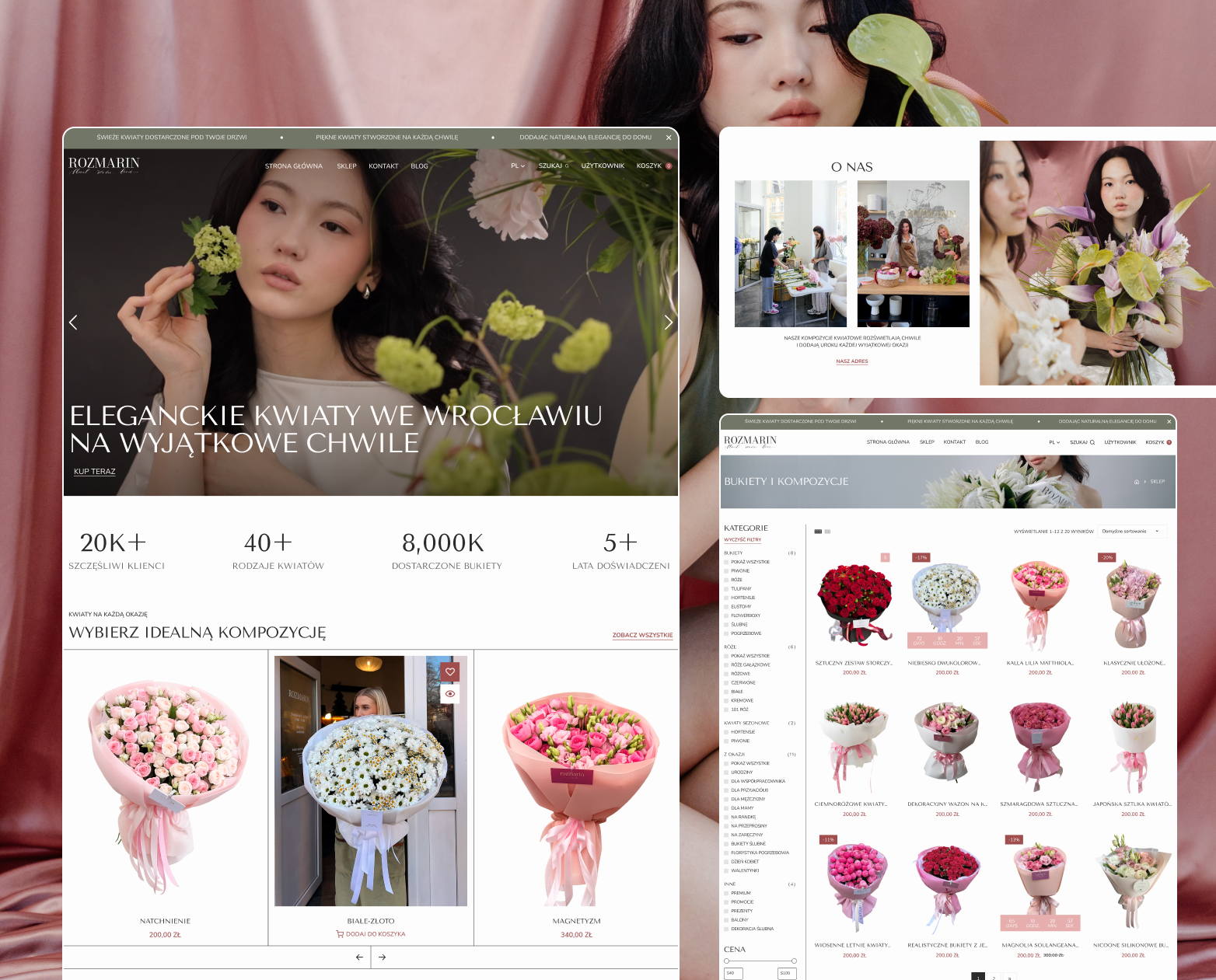
Rozmarin provides a concrete example. The Wrocław florist's store includes occasion-based browsing for moments such as birthdays, weddings and sympathy. Product and price information then helps the visitor choose within that context. The organisation reflects a purchase decision as well as a collection of items.
For your store, bring a sample of the range and explain the questions people ask before buying. We can use that information to discuss categories, filters and product pages. It also helps identify whether the data you maintain today is sufficient for the intended customer experience.
Give product pages the information buyers need
A product page needs to connect the visual impression with a specific offer. Customers should understand what is included, which options they are choosing and which practical details affect the order. The exact information differs between food, flowers, physical goods and other categories.
Photography needs the same attention. A beautiful image may introduce a collection, while a closer view helps explain the individual item. Consistent image treatment can make a range easier to browse. The scope should identify what already exists and which visual material still needs to be produced.
Content responsibilities should be clear too. Your business supplies and approves the facts about its products. We can discuss how those facts are structured and presented. Product copy, photography, translations and importing catalogue data should each have an explicit place in the project scope.
Separate retail purchases from trade conversations
A retail shopper and a wholesale prospect may arrive with different questions. One wants to choose an item and order. The other may need to discuss quantities, supply terms or suitability for their business. Sending both through the same journey can create unnecessary confusion.
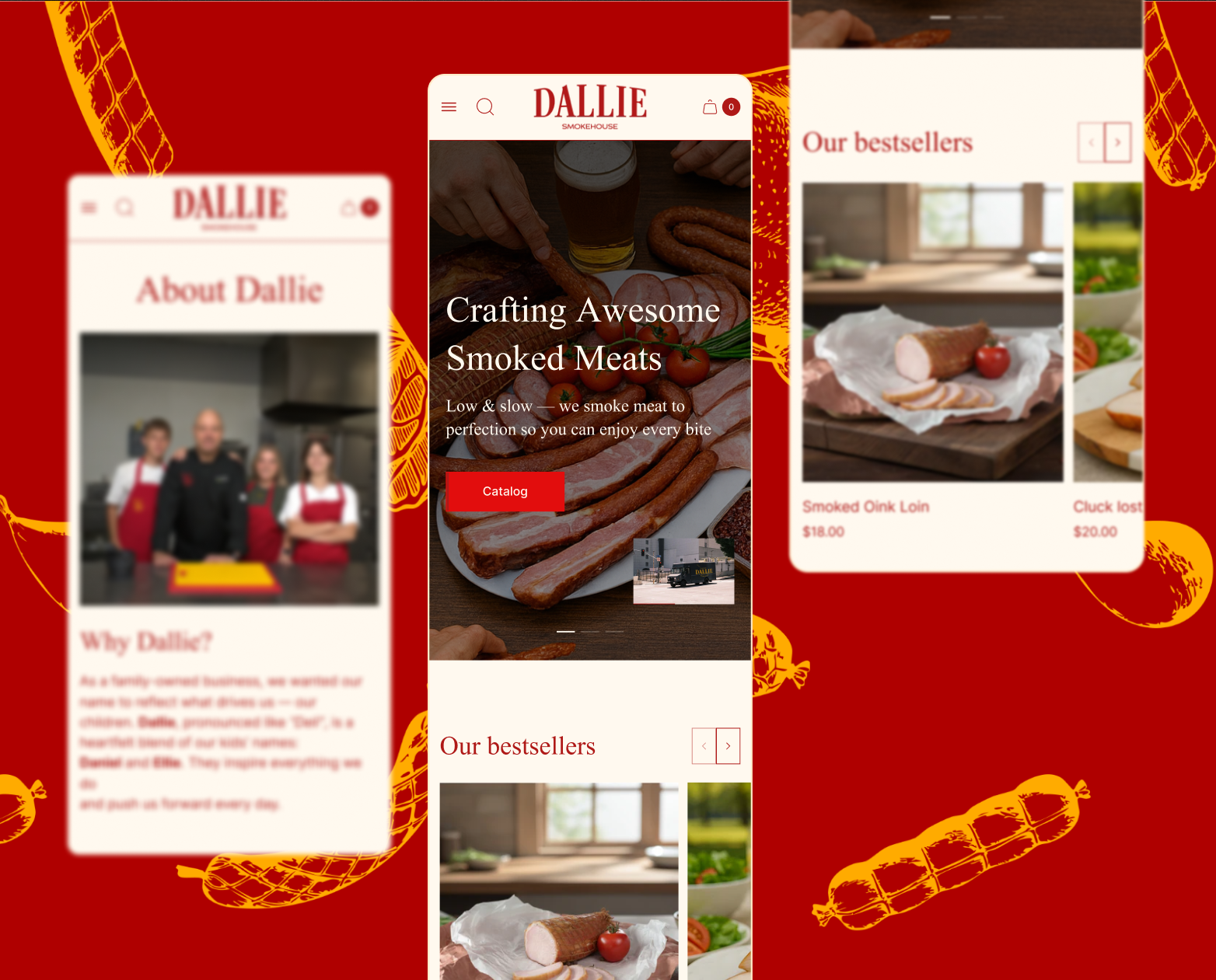
Dallie Smokehouse combines a Shopify store with a separate wholesale inquiry route. The US smoked-delicacies business presents its products and identity in one site while giving trade interest a different next step. It is a useful reference for businesses serving both audiences.
For your own project, establish whether trade buyers need an inquiry form, account access or a separate purchasing arrangement. These are different scopes. We should choose the route that matches the way you actually sell, rather than assume that a wholesale label requires a complex portal.
Choose the platform with daily work in mind
Shopify and WordPress are both represented in our store portfolio. The right discussion begins with your range, operating model and the people who will maintain the shop. Platform preference is only one part of the decision.
Consider the tasks your team will repeat: adding products, changing prices, preparing promotions, updating information and reviewing orders. Existing tools and any required connections also matter. A store that looks right but makes routine work awkward leaves the business with an ongoing problem.
The proposal should explain the chosen platform, the agreed configuration and the services the store will depend on. Where a feature requires an additional application or separate development, that should be visible in the scope. It helps you understand both the initial project and the responsibilities that continue afterwards.
Set the rules around the order
Delivery areas, fulfilment choices and customer communication belong to the business model. The site needs to present the agreed rules clearly and support the relevant steps. Those details should be settled with the business before the final purchasing journey is accepted.
For a multilingual store, check more than category names. Product descriptions, ordering guidance and the information surrounding the purchase need to make sense in each version. Rozmarin's Polish, English and Ukrainian pages show why language is part of a store's structure.
A project can also involve migrating an existing catalogue or preserving useful URLs. If that applies, share the current store and product data early. Understanding what must be carried forward is more reliable than discovering it after the new design has been agreed.
Review the store as a customer and an operator
A useful review follows real tasks. Find a relevant product, compare its options, add it to the cart and check whether the order information is understandable. Try the same journey on a phone, where a customer may see less information at once.
Then review the work from your team's side. Can the person responsible maintain the agreed fields? Is the product structure understandable? Are order-related responsibilities clear? For any connected services, identify what happens when information is missing or a step cannot be completed.
These checks should be part of the agreed acceptance scope. The purpose is to make the store usable for its intended operation. A polished homepage is one part of that result; the less visible product and order details determine whether the shop can be managed with confidence.
Define a store project worth estimating
To begin, share the product range, the current website or selling channel and the countries or customers you want to serve. Explain whether the catalogue is new, already maintained in another system or ready to import. Mention any essential delivery, payment or business-tool requirements.
If branding is also needed, we can discuss it alongside the store. Dallie shows that combined scope; Rozmarin shows a shop built around an established florist's work and photography. Your starting materials and business priorities determine which approach is useful.
The estimate can then name the storefront, content work, catalogue preparation, agreed functions and launch responsibilities. Tell us what buying should look like for your customer and what operating the shop should look like for your team. That is the foundation for a store that belongs to your business.