
A food brand needs an identity and a place to buy
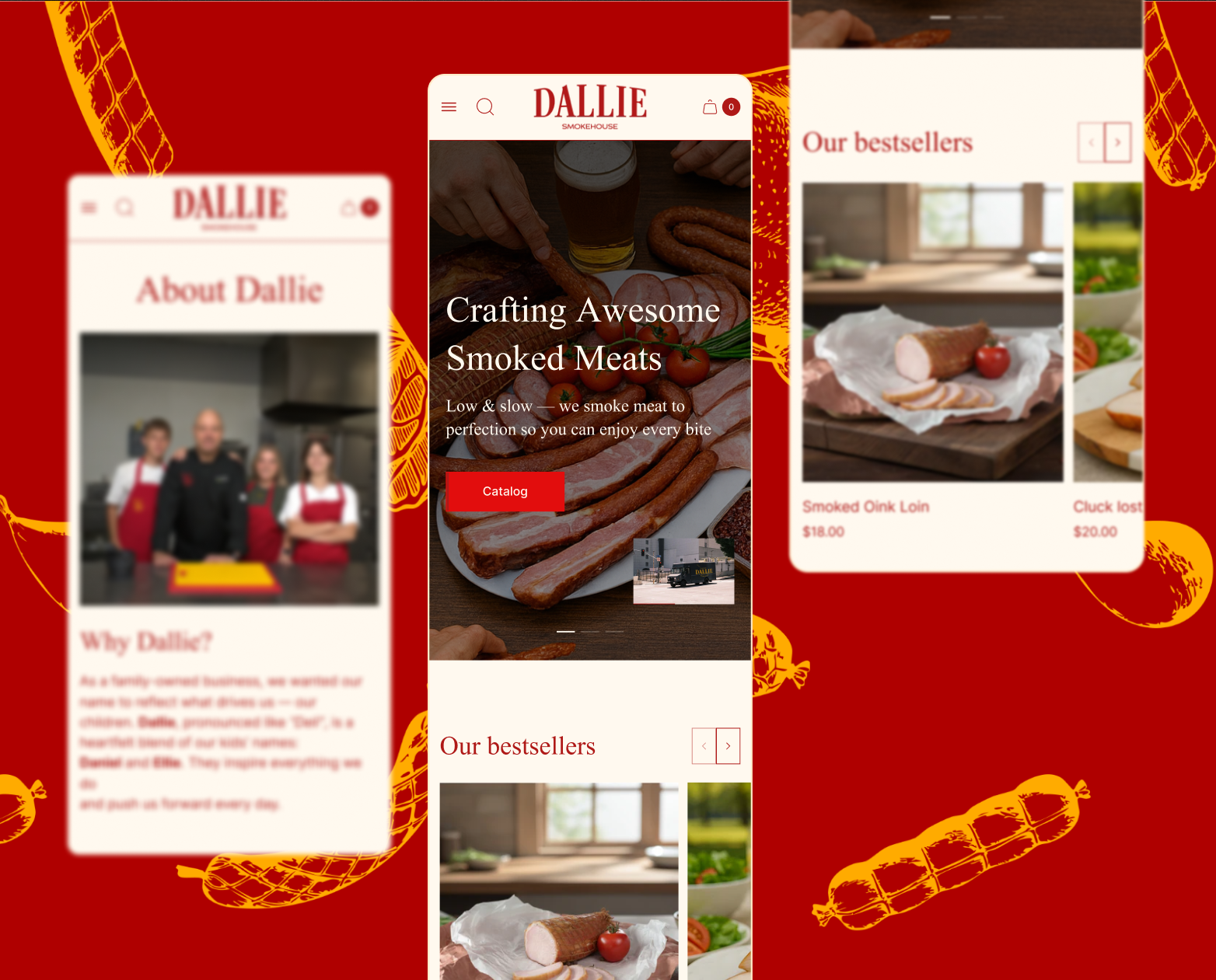
Dallie Smokehouse is a US business making smoked delicacies. The project brings together the way the brand is recognised and the way its products are presented online: logo, visual identity, brand rules and a Shopify store.
The website serves more than one type of visitor. Retail customers can explore the products and shop, while wholesale prospects have a separate inquiry route. Both encounters belong to the same brand, but they lead to different next steps.
For a business owner, Dallie is a useful reference when identity and ecommerce need to be considered together. It shows a product brand carried into a storefront, with the buying context influencing the structure. The work also includes AI-generated visual material as part of the project's creative assets.
The logo has to belong to the product
For a food business, the central mark appears close to the product and the information that describes it. It needs to be recognisable at different sizes and remain clear when the surrounding space is limited. A large logo presentation alone cannot settle those practical questions.
Dallie's logo and identity were developed as part of the brand work. The mark has a craft character, supported by a palette associated with the smoked-food direction. The identity then extends into the digital store, linking the product business with its online presentation.
The useful consideration for another brand is where recognition begins. A customer may first see a label, a social image or the website. The mark should work across those encounters, while the surrounding system allows each format to present its own information clearly.
Brand rules connect the different applications
The project includes brand rules alongside the logo and visual identity. These provide a shared direction for how the brand appears across product-related material and the store. Their role is to make the parts feel connected when their dimensions and content differ.
A product business needs more than repeated placement of a logo. Colour, typography, graphic choices and image treatment influence whether the storefront feels like the same business as the product. Consistency comes from those relationships as well as the central mark.
For an owner commissioning similar work, the key is to name the applications in the scope. Identify what needs to be created now and which materials other people will produce later. That helps determine whether a focused identity package or a fuller brandbook with practical examples is appropriate.
Shopify provides the setting for the retail shop
Dallie's online store is built on Shopify. The storefront presents the products within the developed identity and gives retail customers a purchasing route. The website therefore joins the brand introduction with the commercial offer rather than treating them as separate destinations.
For a customer considering food products, the imagery and identity establish an impression, while the individual product information needs to explain what is being offered. A store has to hold those two levels together: the overall character of the business and the specific decision about an item.
The relevant question for another Shopify project is what the shop must help people understand before they buy. Product structure, options, content and practical order information should come from your own range and operating model. Dallie supplies a reference for the relationship between branding and storefront, not a universal catalogue structure.
Wholesale prospects have a separate route
A retail purchase and a wholesale inquiry involve different questions. The retail customer wants to select an available product. A trade prospect may need to discuss quantities, suitability or supply terms with the business before a purchase can be defined.
Dallie's site includes a separate wholesale inquiry path. This lets the brand address business interest without forcing that visitor to use the retail cart as a substitute for a conversation. The website remains one presentation, while the action reflects the type of customer.
For a similar business, the first decision is how wholesale sales actually work. An inquiry route, a signed-in catalogue and direct trade ordering are different project scopes. Define the appropriate next step before choosing features, so the site supports the sales model the company is ready to operate.
Creative visuals support the presentation
AI-generated visuals are documented as part of Dallie's creative work. They belong to the visual presentation of the brand and its products. Their role should be understood alongside other imagery and the factual information that customers use to evaluate an offer.
For a food store, different images can have different jobs. A mood image can introduce atmosphere or a collection. A product view needs to help people understand what they are buying. The content plan should make those roles clear and keep product descriptions aligned with the business's actual offer.
When discussing a comparable project, bring the photographs and other visual material already available. Identify what is suitable for product explanation and where creative assets are needed. That makes it possible to scope imagery as a deliberate part of the storefront rather than an unresolved gap discovered during design.
The US context belongs to the client's business
Dallie is a US smoked-delicacies business, and the English-language presentation serves that commercial context. The project is relevant to an international owner evaluating a remote agency for a US-facing store and identity project.
The useful preparation for another market-facing project is specific. Who is buying? Which products are available to them? What should the store explain about the offer and the order? Which terms and product facts must be reviewed by the business? Those questions matter more than relying on English as a substitute for market knowledge.
Your own store may serve different locations, products or buyer groups. The scope should reflect those distinctions in its content and customer paths. Dallie demonstrates the combined brand-and-store format, while the details of a future project should come from that business's requirements.
Plan the brand and shop as connected decisions
Dallie brings several related choices into one project: the central mark, the visual system, its rules, product presentation, a Shopify storefront and a separate route for wholesale interest. The relationship between them is the most useful part of the case for another owner.
If you are preparing a similar launch, share your product range, intended customers and existing brand material. Explain how retail and trade sales work, what imagery you have and which applications need to be ready with the store. These inputs help connect the brand scope with the ecommerce scope.
We can then discuss what should be created together and what can be staged separately. The objective is a recognisable product business with a clear online offer, appropriate paths for its customers and a practical set of assets the team can continue using.