
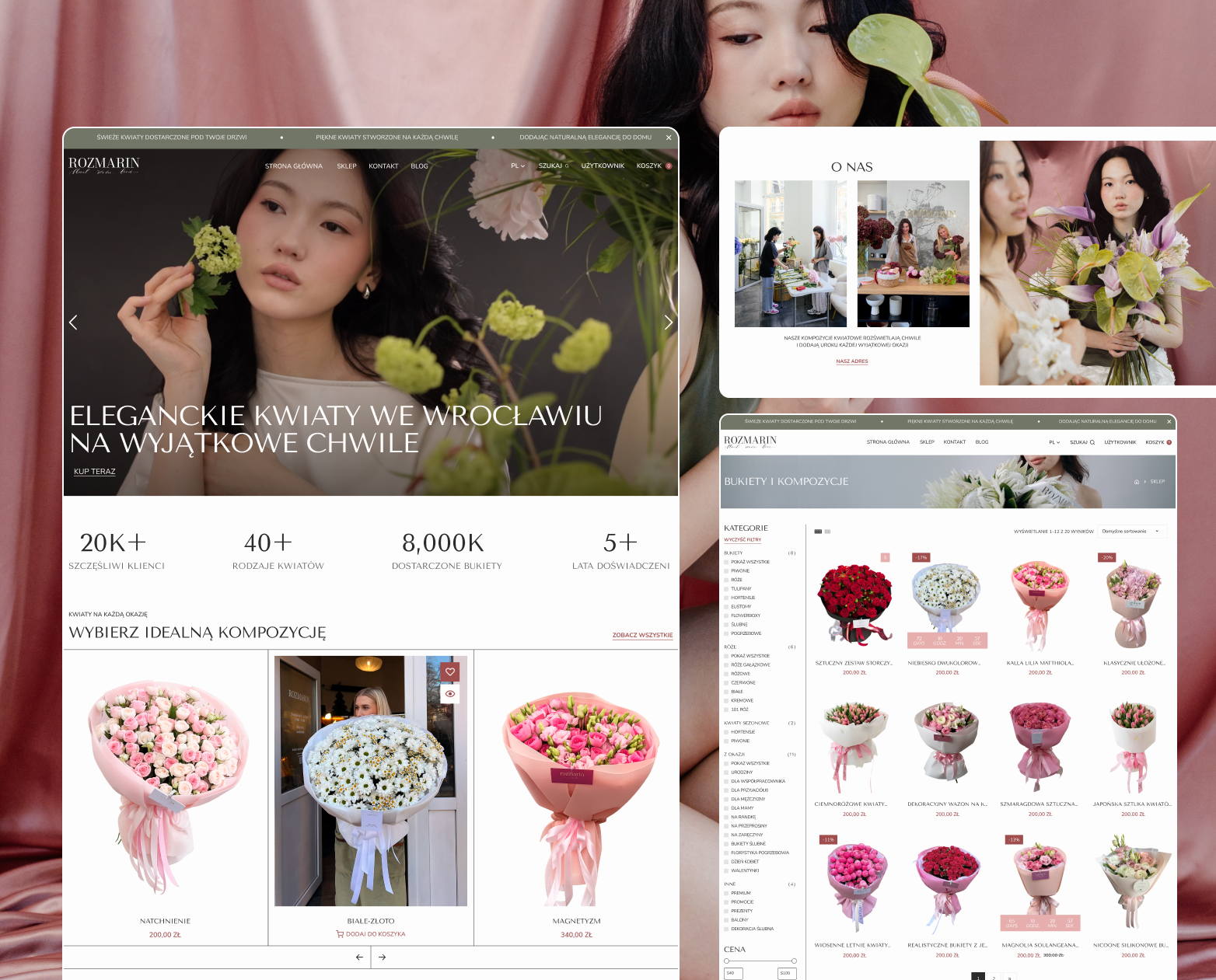
The purchase begins with a reason to send flowers
Rozmarin is a florist in Wrocław. Its customers may arrive with a particular composition in mind, but they may also begin with an occasion: a birthday, a wedding, an engagement or a moment that calls for sympathy. The online shop needs to support both ways of choosing.
Our work is a WordPress store with Polish, English and Ukrainian pages. The catalogue combines occasion-based browsing with product information and price filters. Shopping functions include a cart, wishlist, customer accounts and promotions, with delivery information presented as part of the store.
For an owner planning an online shop, Rozmarin offers a useful example of customer-led organisation. The site is shaped around how someone enters the purchase, while the product catalogue and management tools support the work the florist needs to do behind it.
Occasions give the catalogue a familiar starting point
A customer does not always know the names of flowers or the exact arrangement they want. They may know who will receive them and what the gesture needs to express. Occasion categories provide a way into the range using that existing context.
The Rozmarin catalogue includes birthdays, weddings, engagements and sympathy among its occasion routes. The products then give a more concrete choice through imagery and price. People who know what they are looking for can still browse the flowers and compositions themselves.
The broader business question is how customers describe their need before they understand the catalogue. A shop can reflect that language without abandoning its product categories. For gifts, specialist goods and other considered purchases, that may be more useful than organising every entry point around the seller's internal terminology.
The florist's own photography carries the product presentation
Rozmarin uses photography from its own shop. That gives the online catalogue a visual connection with the florist's work. The images help visitors see the compositions they are considering and the character of the business behind them.
In a flower shop, imagery is part of the product explanation. Shape, colour and arrangement matter to the decision. The page still needs practical information around the photograph, because a visual impression alone does not explain the offer or the steps involved in ordering.
For a similar project, existing photography is an important input to the scope. Review what is available, which products it represents and whether the images can be used consistently across the catalogue. That conversation can reveal production needs before the storefront design is built around material the business does not yet have.
Price filters support a different kind of decision
Some visitors begin with an occasion; others begin with a budget. Price filters give the latter group a practical way to narrow the catalogue. They complement the emotional and visual side of choosing flowers with a clear commercial parameter.
The relationship between browsing routes matters. A person should be able to understand the products within their chosen context rather than repeatedly start over. Product prices and the catalogue's structure provide the information needed to compare options before moving to the cart.
When planning another store, consider which customer constraints can be represented accurately in the data. A filter needs consistent values and a clear label. The goal is useful comparison, so the best choices are the ones that correspond to questions customers actually bring to the purchase.
Shopping functions extend the catalogue into a store
The Rozmarin project includes a cart, wishlist, customer accounts and promotions. These functions give the site a role beyond displaying arrangements. A customer can move from browsing into the store's purchasing journey, while the florist can maintain offers through its management tools.
Each function needs a reason within that journey. A cart collects the chosen items. A wishlist supports keeping a selection. Accounts and promotional information create further parts of the store experience. Their presence also means the project must consider the pages and messages around those actions.
For a new ecommerce brief, identify which functions belong in the first release and what your team can support operationally. A catalogue with purchasing features requires product information, order rules and ongoing maintenance. Those responsibilities should be discussed alongside the visual presentation.
Three languages are part of the storefront
The shop has Polish, English and Ukrainian pages. This gives the same florist several language routes for introducing the offer and helping people navigate the catalogue. The language structure is connected to the shop rather than limited to a short welcome message.
For the business, each additional language also introduces content responsibilities. Product information, category labels and practical guidance need to remain understandable as the offer changes. The owner needs to know which content is shared and which requires language-specific attention.
Rozmarin is therefore a useful reference for a local business serving customers who use different languages. The starting question is which versions the actual audience needs and how the business will maintain them. That leads to a more practical scope than adding languages simply because a platform permits it.
Store management supports a changing range
The florist can edit products and prices through the store management area. Promotions are also part of the documented shop scope. Those capabilities matter because the public catalogue needs to reflect the offers the business is prepared to sell.
A store project should make the recurring editing tasks clear. Who adds a product? Which information must be supplied before it appears? How are prices and promotional material kept current? The design of the customer-facing catalogue depends on the information available from that routine work.
For a business preparing its first shop, a sample of product data can expose these questions early. It is easier to define usable fields and categories when the team can see real examples. That helps connect the proposed store with the way the company will operate it.
A useful reference for shops built around context
Rozmarin combines the florist's own product imagery, occasion-based discovery, price comparison and shopping functions in three languages. The important relationship is between a customer's reason for buying and a catalogue the business can maintain.
If your customers also shop by moment, recipient or intended use, consider how that context could guide your own navigation. Bring examples of the questions they ask, a sample of the range and the materials you already have. Explain which ordering and delivery details the site needs to communicate.
We can use those inputs to discuss the structure, platform and content scope for your shop. The result should make the products easier to understand within the customer's situation and give the business a clear way to keep its online offer useful as the range changes.