
Choose a brand package by what you need to create
A new business may need a name presented clearly on a website. A growing product range may need recognisable packaging and store visuals. An established company may need its materials to look related when several people create them. Each situation asks for a different depth of branding work.
Our offer has three levels: logo design, visual identity including a logo, and a full brandbook including logo, identity, rules and applications. The choice depends on the assets you need and the people who will use them. The package names describe our scope, so the actual deliverables should still be listed in the proposal.
Pills approaches branding as something the business will put to work. We discuss the offer, audience and intended uses before choosing the right starting scope. That keeps the visual direction connected to the places where customers will encounter it.
A logo establishes the central mark
The logo package focuses on the sign or wordmark that identifies your business. Its form needs to work in the contexts that matter to you, whether that is a website header, a product label or a compact profile image. These uses help define the versions required.
A logo project should agree the brand name, any accompanying wording and the applications used to evaluate the design. A detailed emblem and a simple wordmark present different practical choices. The mark also needs a useful set of files and guidance for the agreed basic uses.
Choose this scope when the central identifier is the immediate need and the wider visual system is already sufficient or genuinely outside the current project. If you also need coordinated colours, typography, graphics and material layouts, the visual identity package is the more relevant discussion.
Visual identity connects the materials around the logo
Our visual identity package includes the logo. It adds colour, typography, graphic direction and agreed applications so the business can appear recognisable across more than one format. The system should give different materials a relationship without forcing them to look identical.
The intended applications shape the work. A company presenting services through proposals and a website has different requirements from a brand selling products with labels and store imagery. Knowing what you will produce helps us test the identity in useful situations.
Choose visual identity when you need a coherent set of assets for a launch or a refresh. Name the materials that matter most and how they will be used. That gives the project a concrete boundary and avoids treating every possible future application as part of the initial delivery.
The full brandbook includes creation and rules
Our full brandbook package combines logo design, visual identity, usage rules and examples. It is intended for a business that needs both the system and a clear reference for applying it. The document explains how the agreed visual decisions work across the named materials.
Rules should solve real production questions. Which logo version belongs on a dark background? How much space should surround it? Which type styles create a readable hierarchy? How should photographs and graphic elements be combined? Examples make those answers easier to use.
A brandbook is particularly relevant when several people or external suppliers produce materials. The scope should reflect their work rather than an arbitrary page count. If your identity already exists, documenting and organising it can also be estimated separately from creating a new one.
Use the business context to guide the direction
A visual direction should fit the offer and the audience's expectations while giving the company its own character. Start with what customers need to understand: the category, the level of service, the nature of the product and the reason they might choose you.
References are useful when they include an explanation. You might like the clarity of a wordmark, the way a food brand uses texture or the restraint of a service company's palette. The underlying quality can inform the discussion without copying another company's identity.
Existing recognition also matters. If the business already has customers, identify which elements they know and which create difficulties. A refresh can preserve useful continuity. A broader redesign may be appropriate when the offer or audience has changed, but that should be a deliberate business decision.
Two projects show identity in use
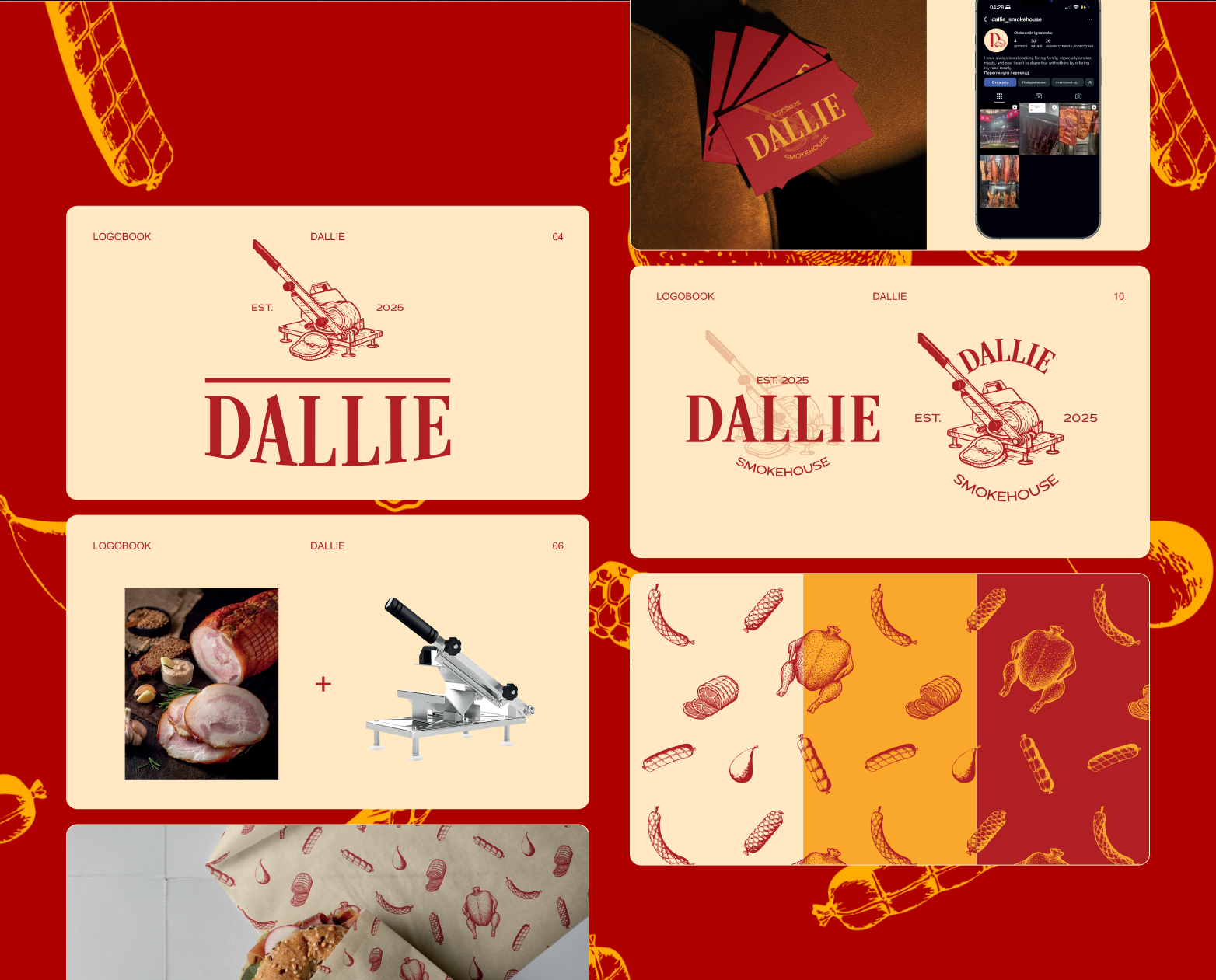
Dallie Smokehouse is a US smoked-delicacies business. Its project combines a logo, visual identity and brand rules with a Shopify store. The identity therefore has to belong to the product presentation as well as the place where customers shop and wholesale prospects inquire.
Lokalizacja combines branding with a property agency website. In that context, the brand surrounds changing listing photographs and practical property information. It needs to identify the agency while allowing the offers themselves to remain easy to understand.
These examples show why branding should be evaluated in application. A strong standalone mark is useful, but the surrounding material reveals whether the system supports the business. Your own website, packaging or sales documents provide the relevant setting for judging the direction.
Agree the handover and the boundaries
List the assets the team will receive and how they will be used. A logo file, a reusable layout and a finished print application are different deliverables. The proposal should distinguish them and identify which formats or editable source materials are included.
Typography, photography and other licensed assets also need practical decisions. Establish who obtains any required licences and which uses are intended. For production materials, identify who supplies dimensions, specifications and approved business information. Those inputs can affect what is ready to produce.
The review process should relate to the scope: the central idea, the system in application and the usability of the final materials. The number of directions, revisions and applications belongs in the agreement. It should be clear enough that both sides understand what is being developed.
Find the right place to begin
If you mainly need a new mark, explore logo design. If you need the business to look coherent across several materials, explore visual identity. If you need a complete system and a reference that other people can follow, explore the full brandbook package.
Bring your existing assets, a description of the audience and a list of the materials you expect to create. Explain whether the business is launching, changing its offer or updating an established identity. If a website or store is planned, mention it so the related decisions can be considered together.
We can then discuss the appropriate package and its concrete applications. The useful result is a brand system at the right depth for your business: something you can recognise, apply and continue using in the work that follows the project.