
Connect the customer journey with the team's workspace
Your website and CRM see different parts of the same business conversation. The website introduces the offer and captures interest. The CRM helps the team organise relationships, records and next actions. When the connection between them is incomplete, people have to reconstruct context by hand.
A useful integration carries the information required for the next step. That might include the service requested, the property a customer selected or the page that prompted an inquiry. The goal is to give the receiving person enough context to act without asking the customer to start again.
Pills can discuss CRM connections, custom business interfaces and customer areas as distinct project types. The right choice depends on what you already use and which action the current setup cannot support. Start with the workflow, then consider the format.
An integration and a new CRM are different scopes
An integration connects existing systems around agreed information and rules. It can be appropriate when the team already uses a CRM and needs its website to fit that workflow. Replacing the CRM is a separate decision that should have its own business reason.
A custom system may be worth considering when important roles, records or actions cannot be handled appropriately with the existing tools. That introduces more decisions: what the interface shows, who may change information, how records relate and who maintains the system over time.
A customer portal adds another audience. External users need a clear reason to sign in and access only the material or actions intended for them. A portal is useful when it solves a recurring customer task; it should not be added simply because the business already has internal data.
Map the records that matter
Begin with the information your team uses in a real conversation. A contact record alone may not preserve a customer's question, the product involved or the person responsible. Decide which details belong together and where their authoritative version is maintained.
For each field, ask who creates it and who may update it. A price maintained in the CRM should not be silently replaced by an older website value. A customer's new inquiry should not accidentally erase the context of a previous conversation. These are business rules as well as data decisions.
The mapping should be clear enough for the people doing the work to review. They can identify ambiguous labels, missing context and exceptions that are easy to overlook in a generic list of fields. Their input makes the proposed connection more relevant to daily use.
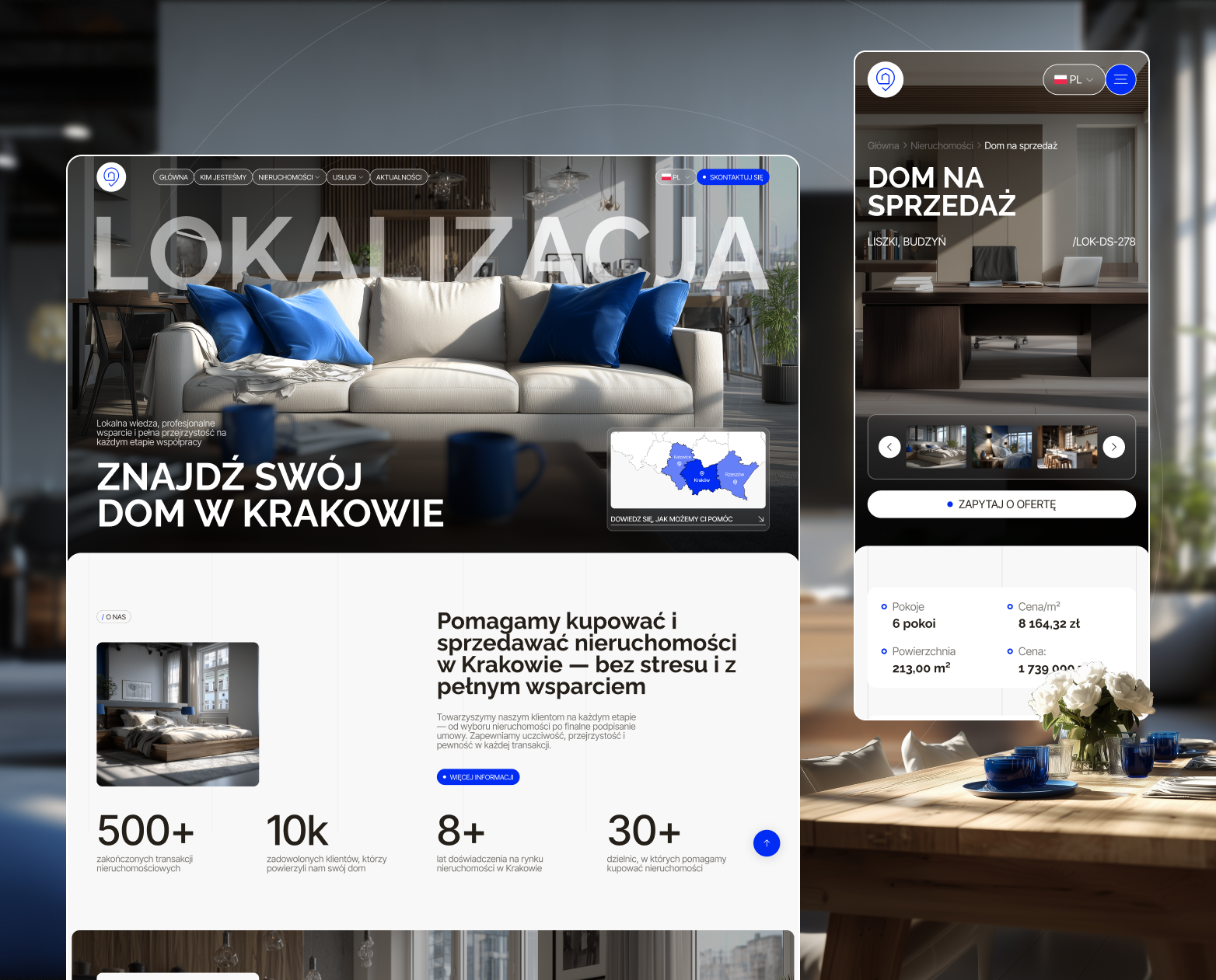
Lokalizacja shows a catalogue connected to its source
Lokalizacja is a Kraków property agency. Its custom WordPress website presents a catalogue in Polish and English, with information supplied by the agency's CRM. The documented connection includes property photographs, prices and parameters.
Visitors can filter the catalogue by criteria such as property type, transaction, location, price, area and rooms. Each property inquiry is directed to the responsible agent. The public website therefore supports discovery while keeping the selected listing connected to the subsequent conversation.
For another business, the lesson is to define the relationship between public information and maintained records. The project shows an integration with an existing CRM. A new custom CRM, a customer portal or a different source system would require its own scope and assessment.
A customer area should give users a useful action
Before commissioning a portal, identify what customers cannot do conveniently today. They may need to review selected information, provide a document, see a request status or complete an agreed step. These are possible uses to assess, rather than a default feature list.
The interface should expose only the information required for that task. Internal notes, ownership details and operational fields often have no place in the customer's view. User roles, access changes and the end of a customer relationship need to be considered alongside the main screen.
Also ask whether an existing tool already provides the required experience. A custom area may be appropriate, but the value should come from the task it enables. Comparing the required actions with existing capabilities helps keep the project focused and its ownership cost understandable.
Preserve context when requests reach the team
Inquiry handling should explain what happens after a form is submitted. Does the request create a new record or attach to an existing one? Which person or team receives it? What information should be visible in the notification, and what stays in the main system?
ASKI Studio provides a smaller example of connected inquiry handling. Its consultation form routes requests to email and a studio Telegram bot. The website supports the introduction, while the routing delivers the request to the channels selected for the studio.
Your business may require different destinations or ownership rules. The scope should identify those rules rather than promise a generic connection to every tool. It should also distinguish the successful transfer of a request from the human work required to follow it up.
Accept the connection through realistic situations
A review should cover ordinary records and the exceptions the team expects to encounter. Consider a new customer, a returning customer, an incomplete request and a repeated submission. For catalogue data, consider changes, missing information and records that should no longer be public.
The business should be able to see the expected result in the receiving system. Where a transfer cannot complete, the responsible person needs an agreed way to notice and resolve it. These details belong in the acceptance scope because they affect daily reliability.
Access and maintenance should be reviewed at the same time. Establish who controls connected accounts, which permissions are required and what happens when a provider or business rule changes. The proposal can then state the initial delivery and any continuing support as separate, understandable responsibilities.
What we need to discuss your project
Send the names of the systems already in use and describe the task they need to support together. Include the website, the types of records involved and the people who use them. A simple example with identifying customer information removed is often more useful than a long list of desired features.
Explain the current difficulty: repeated entry, missing context, unclear ownership, outdated public information or a customer action that cannot be completed. Identify which result would make the first project worthwhile. If a portal is involved, describe the customer task separately from the team's internal work.
We can then discuss whether an integration, a focused custom interface or a broader system project is appropriate. That gives the estimate a concrete foundation: specific records, defined users, agreed actions and a result you can inspect in the tools your business will use.